


Industrial Control Transformers for Automation Systems – Everything You Need to Know
 November 4, 2025
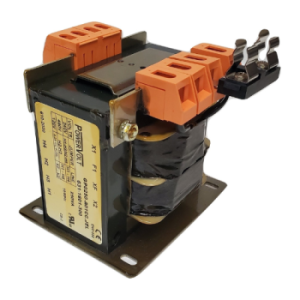
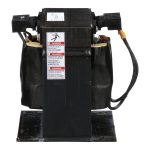
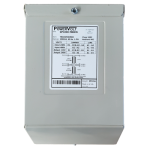
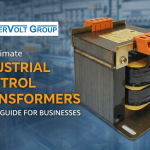
An industrial control transformer is a specialised transformer that supplies low-voltage power to control circuits (such as relays, contactors, pilot lamps) in automation systems.
Unlike general-purpose transformers, it delivers a stable and isolated output — such as 480 V to 120 V or 24 V. This helps safeguard control devices and ensures smooth automation performance.
How Does a Control Transformer Work in Industrial Automation Applications?
Here’s a quick look at how control transformers maintain steady power for automation systems.
- Voltage Conversion: It uses the turns-ratio of its primary and secondary windings to step down the incoming high voltage (for example 415 V/480 V) to a safer control level (such as 120 V or 24 V).
- Inrush Current Handling: Since electro-mechanical devices like contactors and solenoids draw heavy initial current (3-10× normal) when energised, control transformers are designed with low impedance and higher thermal capacity so the secondary voltage remains stable and nuisance trips are avoided.
- Galvanic Isolation & Noise Reduction: By isolating the control circuit from the main power circuit, the transformer prevents electrical noise, spikes or fluctuations in the main supply from upsetting delicate control electronics (PLCs, HMIs, sensors).
- Protection & Longevity: A dedicated control transformer ensures that the sensitive control devices are powered reliably, which protects them from damage due to voltage surges or disturbances common in industrial grids.
Why Are Industrial Control Transformers Essential for Automation Systems?
- Reliability & stability: Stable control-voltage supply means automation systems (CNC machines, robotic arms, process control loops) operate reliably, without unpredictable tripping or faults.
- Equipment protection: Control devices such as PLCs, timers, contactors are costly and sensitive; supplying them via a dedicated transformer helps extend their lifespan and minimise maintenance or replacement costs.
- Enhanced safety: By stepping down high voltage to safer control levels and providing isolation, the risk of electrical hazards is significantly reduced—critical in industrial-automation environments.
- Operational efficiency: With stable control voltage, automated systems perform consistently—leading to fewer errors, less downtime, higher throughput in manufacturing plants.
- Compliance and standards: Quality control transformers from reputable manufacturers conform to safety and performance standards (like UL, CSA, CE) which supports compliance for industrial automation installations.
- Optimised integration: In Indian manufacturing units, where voltage fluctuations are common, a dedicated control transformer ensures reliable integration with the plant’s automation system.
Typical Cost of an Industrial Control Transformer
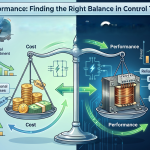
The cost depends on a number of factors—power rating (VA or kVA), voltage class, insulation/construct type, manufacturer, and special features:
- Smaller units (50 VA to 500 VA) for basic control circuits typically cost from around USD 45 up to a few hundred USD.
- Larger units (kVA-class) for heavy industrial automation might run from several hundred to over a thousand USD.
- Factors driving cost include:
- Power rating: Higher VA means more copper, steel, materials.
- Voltage class & insulation: Higher voltage → more complex insulation → higher cost.
- Construction type: Dry-type vs oil-immersed, indoor vs outdoor, special cooling or features.
- Customisation and features: Monitoring, enhanced efficiency, special mounting, certifications.
- Power rating: Higher VA means more copper, steel, materials.
Frequently Asked Questions (FAQ)
1. What is an industrial control transformer used for?
An industrial control transformer is used to provide a stable, low-voltage power supply (such as 24 V or 120 V) to control devices like relays, contactors, and PLCs in industrial automation systems. It ensures reliable operation and protects sensitive circuits from voltage fluctuations.
2. Why are control transformers important in automation systems?
They are critical because they supply consistent voltage to control circuits, isolate them from the high-voltage main supply, and reduce electrical noise. This improves reliability, safety, and overall equipment performance in automation and manufacturing environments.
3. How does a control transformer differ from a power transformer?
A control transformer is specifically designed for short-duration, high-inrush loads from devices such as contactors or solenoids. In contrast, a power transformer supplies continuous power for general electrical distribution. Control transformers also provide better voltage regulation for precision control circuits.
4. What are the common voltage ratings for control transformers in India?
In Indian industrial systems, common primary voltages are 415 V or 480 V, and typical secondary voltages include 230 V, 120 V, or 24 V—depending on the control circuit requirements and safety standards.
5. How do control transformers enhance equipment safety?
They isolate the control circuit from high-voltage sources and step down the voltage to safer levels, reducing electrical hazards, shock risks, and equipment damage due to surges or spikes.
Conclusion
In industrial automation systems-whether in Indian factories, process plants or export-oriented manufacturing units-industrial control transformers are small but vital components.
By providing stable, isolated, low-voltage power to control devices, they ensure safety, reliability, operational efficiency and compliance.
Investing in a quality transformer from a reputable manufacturer (for example Indian or global brands with local service) is a wise decision to support your automation system’s long-term performance.