



Key Questions to Ask Before Buying a Control Transformer
 April 16, 2026
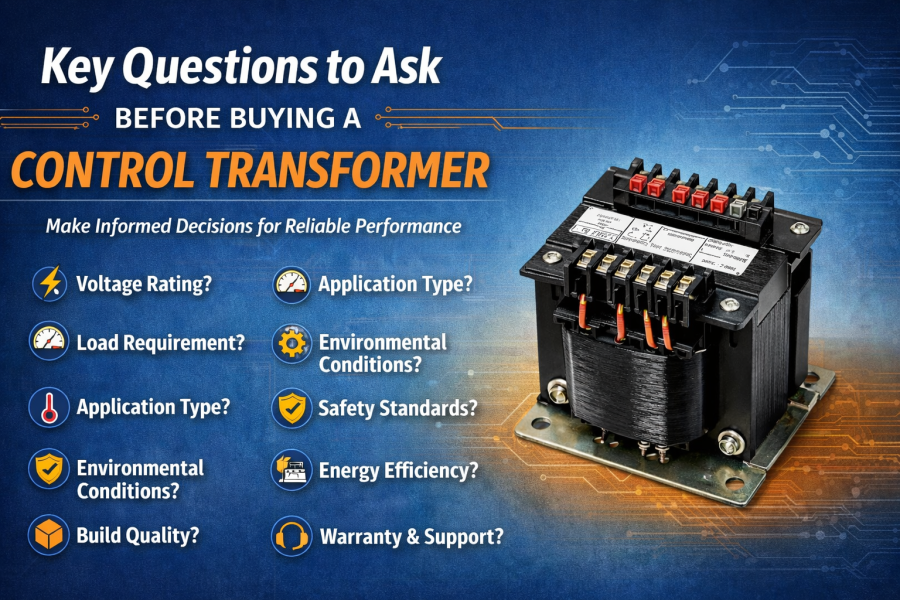
Choosing the right control transformer is not just a technical decision. It directly affects the performance, safety, and efficiency of your electrical systems.
Whether you are an engineer, procurement manager, or business owner, asking the right questions before purchasing can save you from costly mistakes.At Powervolt Group, we believe informed decisions lead to long term reliability. This guide walks you through the essential questions you should ask before buying a control transformer.
1. What Is the Required Voltage Rating?
Start by identifying your input and output voltage requirements. Control transformers are designed to step down voltage to safer levels for control circuits. If the voltage rating does not match your system, it can lead to overheating or equipment failure.
Always check:
- Primary voltage
- Secondary voltage
- Frequency compatibility
A mismatch here is one of the most common and avoidable errors.
2. What Is the Load Requirement?
Understanding the load is critical. Control transformers must handle inrush current, especially when electromagnetic devices like contactors and relays are involved.
Ask yourself:
- What is the steady state load?
- What is the inrush load?
- Will multiple devices operate simultaneously?
Choosing a transformer without considering inrush current can result in voltage drops and unreliable operation.
3. What Type of Application Is It For?
Not all control transformers are built for the same purpose. Your application determines the type and design you need.
For example:
- Industrial automation systems
- HVAC systems
- Machine tools
- Control panels
Each application may require specific insulation, durability, or environmental resistance. Clarifying the use case helps narrow down the right model.
4. What Are the Environmental Conditions?
The operating environment plays a major role in transformer performance.
Consider:
- Ambient temperature
- Humidity levels
- Exposure to dust or chemicals
- Indoor or outdoor installation
For harsh environments, you may need transformers with special coatings or enclosures. Ignoring environmental factors can shorten the lifespan of your equipment.
5. Does It Meet Safety and Compliance Standards?
Safety should never be compromised. Ensure the transformer complies with relevant national and international standards.
Look for:
- Proper insulation class
- Thermal protection
- Certifications such as IS or IEC standards
Compliance not only ensures safety but also simplifies approvals and inspections.
6. What Is the Efficiency and Energy Loss?
Energy efficiency impacts both performance and operational costs. A high quality control transformer minimizes losses and maintains stable output.
Ask:
- What are the core losses?
- What is the efficiency rating?
- Does it maintain voltage regulation under load?
Over time, even small inefficiencies can lead to higher energy bills.
7. What Is the Build Quality and Material Used?
The durability of a control transformer depends on the materials and construction quality.
Check for:
- Copper versus aluminum windings
- Quality of core material
- Insulation strength
High quality materials ensure better conductivity, reduced losses, and longer life.
8. Is Customization Available?
Sometimes standard transformers may not fit your exact requirements. In such cases, customization becomes important.
You may need:
- Specific mounting options
- Custom voltage ratings
- Special enclosures
Working with a manufacturer that offers customization ensures your transformer fits seamlessly into your system.
9. What Is the Warranty and After Sales Support?
A reliable supplier stands behind their product. Before purchasing, understand the warranty terms and support services.
Ask:
- What is the warranty period?
- Is technical support available?
- Are spare parts easily accessible?
Strong after sales support can save time and reduce downtime in case of issues.
10. Is the Supplier Trustworthy?
Finally, evaluate the reputation of the supplier. Experience, customer reviews, and industry presence matter.
A trusted brand like Powervolt Group ensures:
- Consistent quality
- Transparent specifications
- Reliable customer service
Choosing the right supplier is just as important as choosing the right product.
FAQs
1. How do I know the right size of control transformer for my application?
You need to calculate both the steady load and inrush current. Always select a transformer with a slightly higher capacity than your calculated load for safety.
2. Can I use a control transformer for multiple devices?
Yes, but ensure the total load does not exceed the transformer’s rated capacity. Also consider simultaneous operation.
3. What happens if I choose a lower rated transformer?
It may overheat, cause voltage drops, and eventually fail, leading to system downtime.
4. Are copper windings better than aluminum?
Copper windings generally offer better efficiency, durability, and conductivity compared to aluminum.
5. How long does a control transformer typically last?
With proper usage and conditions, a high quality transformer can last 10 to 20 years.
Final Thoughts
Buying a control transformer is not just about price. It is about performance, safety, and long term reliability. By asking the right questions, you ensure that your investment delivers value over time.
Looking for reliable and high performance control transformers tailored to your needs?
Powervolt Group offers expertly engineered solutions backed by industry experience and dedicated support.
Get in touch with our team today to find the perfect transformer for your application and ensure your systems run smoothly and efficiently.