






How Does Insulation Degrade Over Time in Power Transformers?
 April 7, 2026
Power transformers are the backbone of modern electrical infrastructure, ensuring efficient transmission and distribution of electricity across vast distances.
At the heart of every transformer lies its insulation system – an essential component that safeguards internal parts, maintains dielectric strength, and prevents electrical failures.
However, like any material subjected to electrical, thermal, and environmental stress, transformer insulation degrades over time.
Understanding how insulation deterioration occurs is critical for utilities, engineers, and maintenance professionals aiming to extend transformer life and avoid costly failures.
In this blog, we’ll explore the mechanisms behind insulation aging, contributing factors, warning signs, and preventive strategies.
What Is Transformer Insulation?
Transformer insulation typically consists of a combination of solid and liquid materials:
- Solid insulation: Kraft paper, pressboard
- Liquid insulation: Mineral oil or alternative insulating fluids
These materials work together to provide electrical isolation and thermal management. Over time, however, their properties weaken due to various stressors.
Key Mechanisms of Insulation Degradation
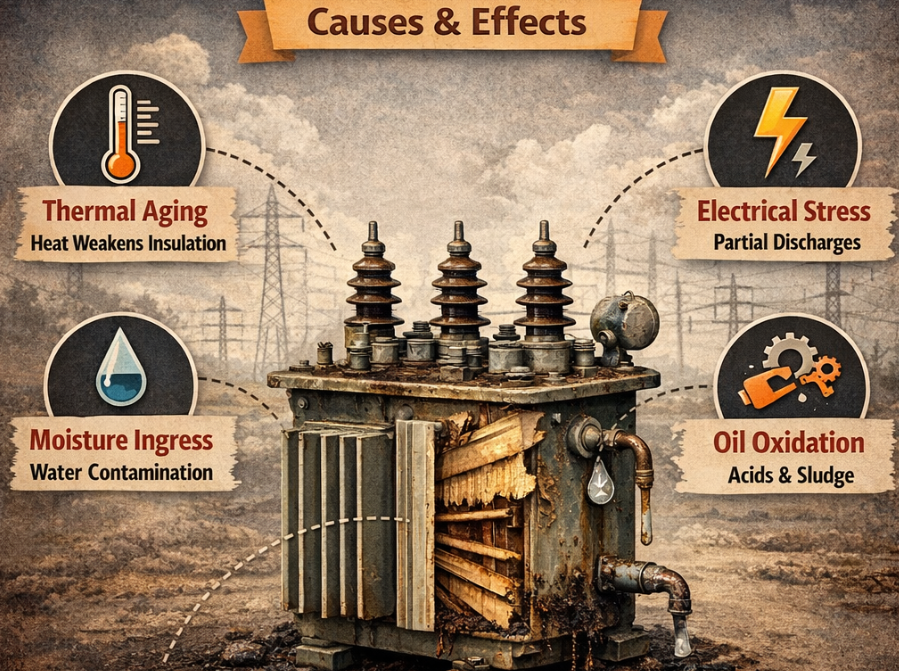
1. Thermal Aging
Heat is the primary driver of insulation degradation. Transformers operate continuously, and elevated temperatures accelerate chemical reactions within the insulation materials.
- Cellulose breakdown: Solid insulation (paper) undergoes depolymerization, reducing its mechanical strength
- Oil oxidation: Insulating oil reacts with oxygen, forming acids and sludge
A general rule known as the “Arrhenius equation” suggests that for every 6–8°C rise in temperature, insulation life is reduced by half.
2. Electrical Stress
High voltage stress can cause partial discharges (PD), which gradually damage insulation.
- Partial discharges: Tiny electrical sparks that erode insulation internally
- Dielectric breakdown: Occurs when insulation can no longer withstand electric stress
Over time, repeated exposure leads to microscopic cracks and eventual failure.
3. Moisture Ingress
Moisture is one of the most harmful contaminants in transformer insulation.
- Reduces dielectric strength
- Accelerates paper aging
- Promotes bubble formation at high temperatures
Moisture can enter through leaks, damage seals, or from the natural aging of cellulose.
4. Oxidation and Chemical Reactions
Oxygen exposure leads to oxidation of transformer oil:
- Formation of acids
- Sludge deposits on windings
- Reduced cooling efficiency
These chemical changes further increase operating temperatures, creating a vicious cycle of degradation.
5. Mechanical Stress
Transformers experience mechanical forces during:
- Short circuits
- Load fluctuations
- Transportation and installation
These forces can weaken insulation structures, leading to cracks and displacement.
6. Contamination
External contaminants such as dust, metal particles, and carbon deposits can compromise insulation integrity.
- Conductive particles increase risk of short circuits
- Sludge buildup reduces heat dissipation
Related Insight: What Factors Affect Reliability in Low Voltage Power Transformer Design?
While insulation degradation is a key concern in high and medium voltage transformers, reliability in low voltage transformer design also plays a crucial role in overall system performance. Several factors influence reliability, including:
- Quality of insulation materials: Even in low voltage systems, insulation must resist thermal and electrical stress
- Thermal management design: Efficient cooling extends transformer lifespan
- Load handling capability: Overloading accelerates wear and degradation
- Manufacturing precision: Proper winding, spacing, and assembly reduce failure risks
- Environmental protection: Protection against moisture, dust, and contaminants is essential
Understanding these factors helps engineers design transformers that are not only efficient but also durable under varying operating conditions.
Additionally, losses within a transformer also contribute to heat generation, which directly impacts insulation life.
To explore this further, read our detailed guide on Stray Losses in Power Transformers: Causes & Reduction Techniques, where we break down how unintended losses can increase thermal stress and reduce overall efficiency.
Signs of Insulation Deterioration
Early detection of insulation degradation can prevent catastrophic failures. Key warning signs include:
- Increased dielectric losses (tan delta)
- Rising moisture content
- Dissolved gas formation (DGA analysis)
- Decreased breakdown voltage of oil
- Overheating and hot spots
Regular condition monitoring is essential for identifying these indicators.
Methods to Assess Insulation Health
Modern diagnostics play a crucial role in evaluating transformer insulation:
1. Dissolved Gas Analysis (DGA)
Detects gases produced by insulation breakdown.
2. Furan Analysis
Measures degradation of cellulose insulation.
3. Insulation Resistance Test
Evaluates resistance to leakage currents.
4. Dielectric Frequency Response (DFR)
Assesses moisture and aging conditions.
How to Slow Down Insulation Aging
While insulation degradation is inevitable, its rate can be significantly reduced with proper maintenance:
- Temperature control: Ensure efficient cooling systems
- Moisture management: Use drying techniques and sealed systems
- Regular oil filtration: Remove contaminants and sludge
- Oxygen control: Use conservators with nitrogen blankets
- Condition monitoring: Implement predictive maintenance strategies
Importance of Proactive Maintenance
Ignoring insulation degradation can lead to:
- Unexpected transformer failure
- Costly downtime
- Safety hazards
- Expensive replacements
By adopting a proactive approach, utilities can extend transformer lifespan by decades.
Why Choose Powervolt Group?
At Powervolt Group, we specialize in advanced transformer diagnostics, maintenance, and life-extension solutions. Our expert team uses cutting-edge technology to monitor insulation health and prevent failures before they occur.
Whether you’re managing a power plant, industrial facility, or utility network, we provide reliable and cost-effective solutions tailored to your needs.
FAQs
1. What is the main cause of transformer insulation failure?
The primary cause is thermal aging, often accelerated by overloading and poor cooling.
2. How long does transformer insulation last?
Typically 20–40 years, depending on operating conditions and maintenance practices.
3. Can insulation degradation be reversed?
No, but it can be slowed significantly through proper maintenance and monitoring.
4. What is DGA and why is it important?
Dissolved Gas Analysis detects early signs of insulation breakdown by analyzing gases in transformer oil.
5. How does moisture affect transformer insulation?
Moisture reduces dielectric strength and accelerates aging of solid insulation.
Final Thoughts
Transformer insulation degradation is a gradual but inevitable process driven by thermal, electrical, and environmental factors. However, with the right strategies and expert support, its impact can be minimized.
Take Action Today
Don’t wait for a failure to happen. Protect your critical assets with expert transformer care.
Contact Powervolt Group today to schedule a comprehensive insulation health assessment and ensure the long-term reliability of your power systems.
Get in touch now and power your future with confidence!