


Why Undersized Industrial Control Transformers Lead to System Failures
 January 8, 2026
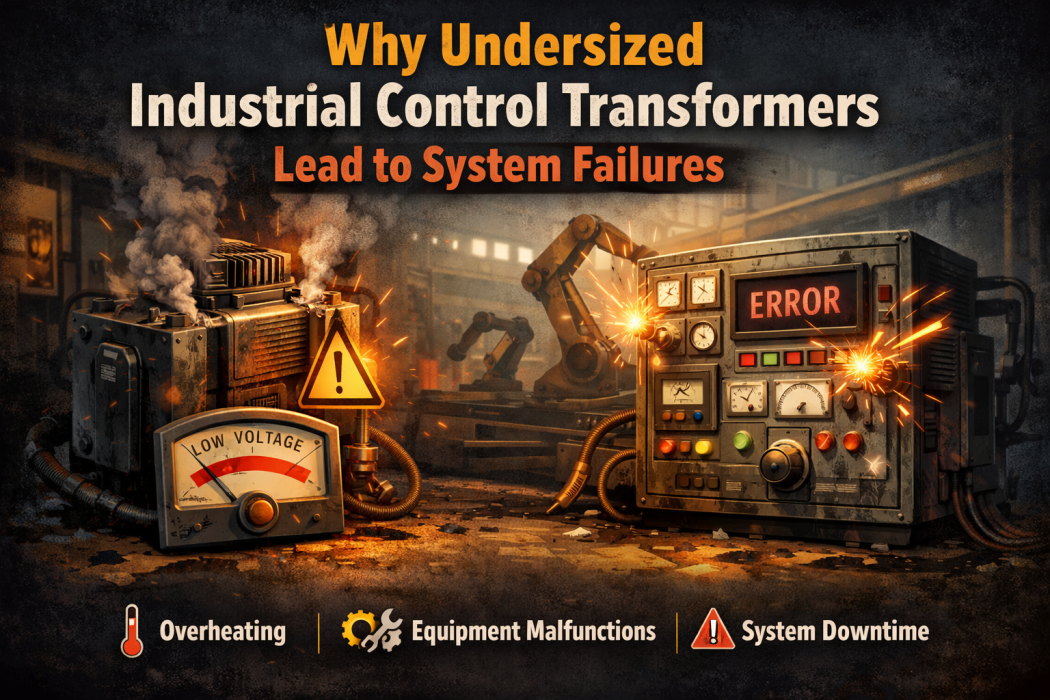
Undersizing is one of the most common yet overlooked reasons for control system breakdowns. Many engineers choose a transformer based only on nominal load values-without considering inrush current, future expansion, or environmental factors.
This is why undersizing Industrial Control Transformers is a leading cause of PLC faults, relay failures, and unexpected downtime.
For a complete overview of selection mistakes, refer to our pillar guide:
Common Mistakes to Avoid When Selecting Industrial Control Transformers
What Does “Undersizing” an Industrial Control Transformer Mean?
A control transformer is undersized when its VA (volt-ampere) rating is lower than the actual demand of the connected control circuit. This often occurs when only steady-state loads are considered, while temporary but significant demands—such as inrush current—are ignored.Undersizing occurs when a transformer’s VA rating is insufficient to handle:
- Total connected load
- Startup and inrush current
- Continuous operating conditions
Industrial Control Transformers must be sized for real operating conditions, not just theoretical values.
How Undersized Industrial Control Transformers Damage Systems?
1. Voltage Drop During Startup
Devices like contactors and relays draw high current when energized. An undersized transformer cannot maintain voltage, causing:
- PLC restarts
- Control logic errors
- Inconsistent machine operation
Why does my PLC reset when machines start?
Your PLC resets when machines start because inrush current causes a sudden voltage drop in the control power supply.
This often happens due to an undersized or poorly selected industrial control transformer that cannot handle startup loads.
2. Excessive Heat and Insulation Failure
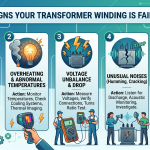
When transformers operate beyond capacity, internal temperatures rise rapidly. Over time, this leads to:
- Insulation breakdown
- Reduced transformer lifespan
- Fire and safety risks
At Powervolt Group, overheating due to undersizing is one of the most common failure causes we encounter in field audits.
3. Nuisance Tripping and Control Instability
Undersized transformers cause frequent fuse blowing and breaker tripping, leading to production losses.
Why Control Transformers Get Undersized?
Undersizing is rarely intentional. Common reasons include:
- Ignoring inrush current from contactors and relays
- Calculating only steady-state VA, not momentary demand
- Last-minute panel changes without recalculating load
- Cost-driven selection, choosing the smallest transformer available
- Lack of safety margin for future expansion
These errors are often compounded in PLC-based systems, which are highly sensitive to power fluctuations.
Related technical insight:
Industrial Control Transformers for PLCs: Common Design Errors
How to Correctly Size Industrial Control Transformers?
- Calculate total VA load
- Add inrush current VA
- Include at least 25% safety margin
- Consider ambient temperature and enclosure type
Powervolt Group provides application-specific transformer sizing to eliminate these risks.
Avoid Costly Failures
Not sure if your transformer is undersized?
Get a sizing consultation from Powervolt Group
FAQs
What happens if a control transformer is too small?
It causes voltage drops, overheating, PLC resets, and early transformer failure.
How much VA margin should I add?
A minimum of 20–30% margin is recommended for industrial environments.
Can undersizing damage PLCs?
Yes. Unstable voltage directly affects PLC logic and communication.
How can I tell if my transformer is undersized?
Signs include excessive heat, frequent tripping, and intermittent PLC faults.
Conclusion
Undersizing industrial control transformers is a common but avoidable design mistake. By overlooking inrush current, operating margins, and real-world conditions, systems are exposed to voltage instability, overheating, and costly downtime.
Proper transformer sizing ensures stable control power, protects connected equipment, and keeps industrial systems running reliably. When in doubt, choosing the next higher VA rating is almost always the smarter—and safer—decision.