





Heat Dissipation and Thermal Management in Class 2 Transformers
 January 29, 2026
Effective heat dissipation and thermal management play a critical role in the performance, safety, and lifespan of Class 2 transformers.
Although Class 2 transformers are designed for low-voltage and limited power output, improper heat control can still lead to efficiency loss, insulation damage, and premature failure.
Understanding how heat is generated-and how it is managed-is essential when selecting a Class 2 transformer for control panels, automation systems, lighting, or HVAC applications.
Understanding how heat is generated-and how it is managed-is essential when selecting a Class 2 transformer.
For a complete overview of selection criteria, safety, and applications, refer to our pillar content: “Class 2 Transformers: Complete Guide to Selection, Safety, and Applications”.
Why Heat Dissipation Matters in Class 2 Transformers
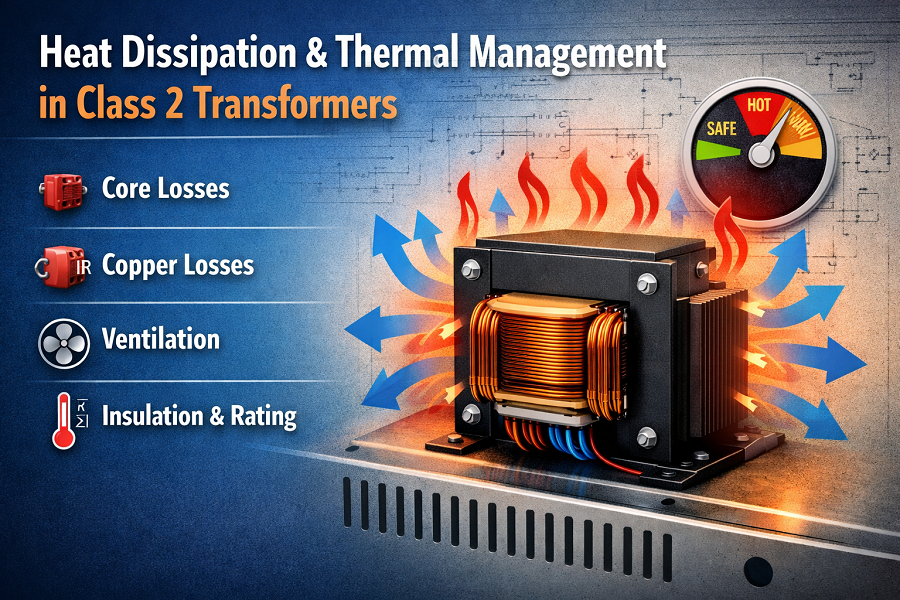
During normal operation, Class 2 transformers generate heat due to:
- Core losses (hysteresis and eddy currents)
- Copper losses in windings
- Ambient temperature conditions
- Continuous or near-full-load operation
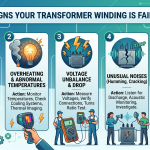
If this heat is not effectively dissipated, internal temperatures can exceed safe limits, reducing insulation life and increasing the risk of downtime. Proper thermal management ensures stable voltage output, long service life, and compliance with safety standards.
Key Thermal Management Factors to Consider
1. Transformer Design and Core Material
High-quality core materials and optimized winding design reduce energy losses and limit heat buildup. Efficient designs allow Class 2 transformers to operate cooler even under continuous load.
2. Ventilation and Mounting
Adequate airflow around the transformer is essential. Wall-mounted or open-frame designs with proper spacing help heat escape naturally. Poor enclosure ventilation is a common cause of overheating in control panels.
3. Insulation Class and Temperature Ratings
Class 2 transformers are built with insulation systems rated to withstand specific temperature limits. Selecting the correct insulation class ensures the transformer can safely handle expected thermal stress over time.
4. Load Management
Operating consistently above the rated load increases heat generation. Proper sizing—based on actual load demand—helps maintain optimal operating temperatures and improves efficiency.
Benefits of Proper Thermal Management
- Extended transformer lifespan
- Improved electrical efficiency
- Reduced maintenance and replacement costs
- Enhanced system reliability
- Compliance with Class 2 safety requirements
Well-managed thermal performance directly supports the safe, low-voltage operation that Class 2 transformers are designed for.
Choosing the Right Class 2 Transformer
When selecting a Class 2 transformer, it’s important to consider not only voltage and VA rating, but also thermal performance under real-world conditions. A well-designed transformer with effective heat dissipation will perform reliably even in demanding industrial environments.
Powervolt Group designs and manufactures high-quality Class 2 transformers engineered for efficient heat dissipation, stable performance, and long-term reliability across industrial and commercial applications.
Looking for a reliable Class 2 transformer with superior thermal performance?
Explore Powervolt Group’s Class 2 Transformer solutions or contact our experts to find the right model for your application.
Conclusion
Effective heat dissipation and thermal management are essential to the safe and reliable performance of Class 2 transformers. Even in low-voltage applications, uncontrolled heat can reduce efficiency, shorten insulation life, and impact long-term reliability. Selecting a properly designed transformer with efficient cooling, appropriate insulation, and correct load sizing ensures stable operation and compliance with safety standards. Prioritizing thermal performance helps minimize maintenance, reduce downtime, and extend overall transformer lifespan.
Frequently Asked Questions (FAQs)
1. Why is heat dissipation important in Class 2 transformers?
Heat dissipation is critical in Class 2 transformers because excessive heat can reduce efficiency, damage insulation, and shorten transformer lifespan. Proper thermal management ensures safe operation, consistent voltage output, and long-term reliability.
2. Do Class 2 transformers overheat easily?
Class 2 transformers are designed for low-voltage and limited power output, which reduces overheating risk. However, poor ventilation, incorrect sizing, or continuous overload can still cause excessive heat buildup.
3. What factors affect thermal performance in Class 2 transformers?
Thermal performance is influenced by transformer design, core material, winding quality, insulation class, ambient temperature, ventilation, and load conditions. Selecting the right VA rating and installation method is key to managing heat effectively.
4. How can overheating in Class 2 transformers be prevented?
Overheating can be prevented by:
- Choosing the correct transformer size
- Ensuring adequate airflow and ventilation
- Avoiding continuous overload conditions
- Using transformers with high-quality insulation and efficient core design
5. Does mounting style impact heat dissipation?
Yes. Wall-mounted or open-frame Class 2 transformers generally allow better airflow than enclosed installations. Proper spacing around the transformer helps heat dissipate naturally and improves overall performance.
6. What happens if a Class 2 transformer operates above its temperature rating?
Operating above the rated temperature can degrade insulation, reduce efficiency, and lead to premature transformer failure. Long-term overheating may also cause safety compliance issues.
7. Are Powervolt Group Class 2 transformers designed for thermal efficiency?
Yes. Powervolt Group Class 2 transformers are engineered with optimized core design, quality insulation systems, and efficient heat dissipation to ensure safe, reliable performance in industrial and commercial environments.
8. How do thermal considerations impact transformer selection?
Thermal management should be considered alongside voltage, VA rating, and application type. A transformer with good heat dissipation will offer better reliability, lower maintenance costs, and longer service life.