








Environmental Considerations in Power Transformer Installation
 February 26, 2026
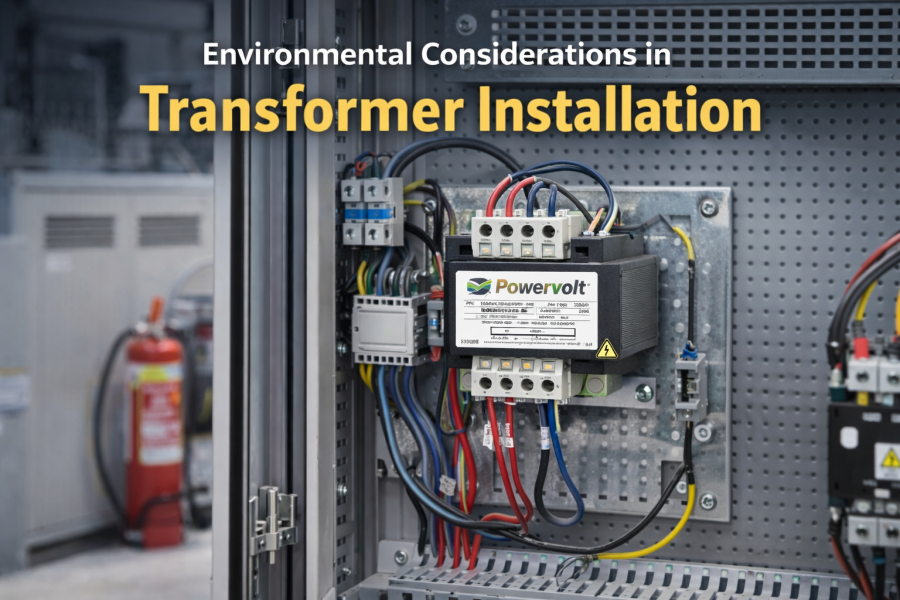
Installing a power transformer is not just an electrical decision-it’s an environmental responsibility.
From oil containment and noise pollution to energy efficiency and regulatory compliance, environmental considerations in power transformer installation play a crucial role in ensuring safe, sustainable, and compliant operations.
This article complements our comprehensive pillar guide
Power Transformers: Complete Guide to Types, Applications, Ratings & Maintenance,
Where we cover transformer fundamentals, selection criteria, performance ratings, and lifecycle management in detail.
At Powervolt Group, we help industries design and install transformers that meet performance standards while minimizing environmental impact.
Why Environmental Planning Matters in Transformer Installation
Power transformers operate in industrial plants, substations, commercial buildings, renewable energy sites, and utility networks. Poor environmental planning can lead to:
- Soil and groundwater contamination
- Excessive noise pollution
- Overheating and reduced transformer lifespan
- Regulatory violations and penalties
- Increased operational costs
A well-planned installation protects both the ecosystem and your investment.
1. Oil Spill Containment & Fire Safety
Most power transformers use mineral oil for insulation and cooling. Without proper containment, leaks can contaminate soil and water resources.
Key Environmental Safeguards:
- Oil containment bunds or pits
- Concrete or HDPE-lined containment areas
- Oil-water separation systems
- Fire barriers and blast walls
- Controlled drainage systems
Facilities often align safety measures with guidelines from the National Fire Protection Association and environmental rules enforced by the Environmental Protection Agency.
For eco-sensitive areas, biodegradable ester-based insulating fluids offer a safer alternative to traditional mineral oil.
2. Noise Pollution Control
Transformer noise is primarily caused by core magnetostriction and cooling fans. In urban or commercial environments, excessive noise can violate local regulations.
Noise Mitigation Techniques:
- Acoustic enclosures
- Anti-vibration mounting pads
- Sound barrier walls
- Low-noise core construction
Environmental noise standards are often influenced by global health recommendations from the World Health Organization.
3. Energy Efficiency & Carbon Footprint Reduction
Energy losses in transformers contribute to greenhouse gas emissions and higher operating costs.
Sustainable Selection Practices:
- Low no-load and load loss transformers
- High-grade silicon steel cores
- Correct kVA sizing (avoid oversizing)
- Compliance with efficiency regulations such as those by the U.S. Department of Energy
High-efficiency transformers significantly reduce lifetime environmental impact.
4. Site Selection & Land Use Impact
Environmental responsibility begins with proper site evaluation.
Important Considerations:
- Flood-prone zones
- Seismic activity
- Soil bearing capacity
- Proximity to water bodies
- Adequate ventilation
In large projects, an Environmental Impact Assessment (EIA) may be mandatory before installation approval.
5. Waste Management & End-of-Life Disposal
Transformers must be disposed of responsibly at the end of their lifecycle.
Best Practices:
- Recycling copper windings and steel cores
- Safe disposal or recycling of insulating oil
- PCB-free compliance
- Certified hazardous waste handling
Sustainable disposal reduces environmental damage and supports circular economy practices.
6. Climate & Ambient Temperature Impact
Environmental temperature directly influences transformer lifespan.
- High ambient temperatures reduce insulation life
- Cold climates affect oil viscosity
- High humidity increases corrosion risk
Proper cooling systems and protective coatings help extend operational reliability.
Why Choose Powervolt Group?
At Powervolt Group, we combine engineering expertise with environmental responsibility. Our transformer installation solutions include:
✔ Environmentally compliant designs
✔ Energy-efficient transformer systems
✔ Custom oil containment engineering
✔ Noise-reduction solutions
✔ Regulatory compliance support
We ensure your installation meets performance, safety, and sustainability standards.
FAQs: Environmental Considerations in Power Transformer Installation
1. Why is oil containment important?
Oil containment prevents soil and groundwater contamination, protecting ecosystems and ensuring compliance.
2. Are biodegradable transformer oils reliable?
Yes, natural ester oils provide strong insulation performance while being environmentally safer.
3. How do I reduce transformer noise?
Use acoustic enclosures, vibration isolation pads, and optimized core designs.
4. Do environmental rules apply to indoor transformers?
Yes. Fire safety, ventilation, and hazardous material regulations apply regardless of location.
5. How does efficiency reduce environmental impact?
Higher efficiency lowers energy losses, reducing carbon emissions and operational costs.
6. Is EIA mandatory for transformer installations?
It depends on project size and local regulations, especially for utility-scale installations.
Conclusion
Environmental considerations in power transformer installation are essential for sustainable infrastructure development.
Proper planning, compliance, and efficient design reduce environmental risks while improving long-term performance.
For environmentally responsible transformer solutions backed by engineering expertise, contact Powervolt Group today.
Partner with Powervolt Group for sustainable, high-performance power transformer solutions.