


Power Transformer vs Distribution Transformer: Key Differences Explained
 February 17, 2026
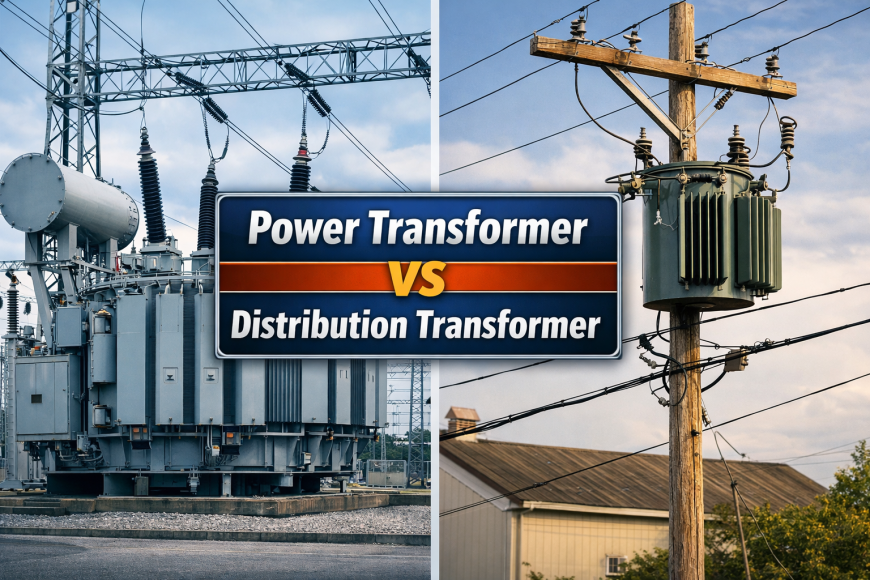
Transformers play a critical role in electrical power systems by safely and efficiently converting voltage levels for transmission and distribution.
From power plants to industrial control panels, transformers ensure reliable power delivery across every stage of the electrical network.
As a trusted manufacturer of industrial and control transformers, Powervolt Group understands the importance of selecting the right transformer for each application.
Two commonly discussed types are power transformers and distribution transformers.
Although both perform voltage transformation, their purpose, design, and applications differ significantly.
This blog explains the key differences between power transformers and distribution transformers to help engineers, OEMs, and system designers make informed decisions.
For a deeper understanding of transformer technology, types, specifications, and maintenance practices, read our comprehensive guide:
Power Transformers: Complete Guide to Types, Applications, Ratings & Maintenance
This detailed resource covers transformer classifications, insulation types, cooling methods, ratings, testing standards, and maintenance best practices for industrial and utility applications.
What Is a Power Transformer?
A power transformer is used in transmission networks to step up or step down high voltage levels between generating stations and substations. These transformers operate at very high voltage levels and are designed for maximum efficiency at full load conditions.
Key Features of Power Transformers:
- Operate at high voltage (typically above 33kV)
- Installed at generation plants and transmission substations
- Designed for maximum efficiency at full load
- Larger in size compared to distribution transformers
- Typically used in transmission networks
Power transformers play a crucial role in reducing transmission losses by stepping up voltage for long-distance power transfer.
What Is a Distribution Transformer?
A distribution transformer is used in the final stage of the power distribution system. It steps down voltage to levels suitable for residential, commercial, and industrial use.
Key Features of Distribution Transformers:
- Operate at lower voltages (typically below 33kV)
- Installed near consumer locations
- Designed for high efficiency at partial loads
- Smaller in size
- Used in local power distribution networks
Distribution transformers ensure safe and stable power supply to end users.
Power Transformer vs Distribution Transformer:
| Feature | Power Transformer | Distribution Transformer |
| Application | Transmission Network | Distribution Netwrok |
| Voltage Level | Above 33kV | Below 33kV |
| Efficiency Focus | Max. efficiency at full load | High efficiency at varying load |
| Location | Power plants & substations | Near consumers & industrial equipment |
| Size | Larger | Smaller & compact |
| Typical Use | Transmission systems | Homes, Buildings, Industrial Control Panels |
Key Differences Explained
1. Voltage Level
Power transformers operate at significantly higher voltages, while distribution transformers handle lower voltage suitable for end users.
2. Efficiency Focus
Power transformers are designed for maximum efficiency at full load, whereas distribution transformers prioritize all-day efficiency because they operate continuously at varying loads.
3. Application Area
Power transformers are used in transmission systems, while distribution transformers are installed closer to homes, offices, factories, and commercial facilities.
4. Size and Construction
Power transformers are generally larger and more complex, while distribution transformers are more compact and cost-effective.
Which Transformer Is Right for Your Application?
The choice depends on:
- Voltage requirements
- Load conditions
- Installation location
- Efficiency expectations
- Budget considerations
For industrial control panels, automation systems, and low-voltage applications, compact distribution or control transformers are typically preferred.
Conclusion
Power transformers and distribution transformers both perform essential voltage transformation functions, but they serve different purposes within the electrical power system.
Power transformers support high-voltage transmission, while distribution transformers deliver usable voltage to industrial, commercial, and residential applications.
Understanding these differences helps engineers, OEMs, and procurement professionals select the right transformer for their specific requirements. Partnering with an experienced manufacturer ensures reliable performance, safety compliance, and long-term operational efficiency.
Get Expert Transformer Solutions from Powervolt Group
Choosing the right transformer is essential for ensuring reliable performance, electrical safety, and long equipment life.
Powervolt Group manufactures high-quality industrial control transformers and low-voltage transformer solutions trusted by OEMs, panel builders, and industrial professionals.
Whether you’re designing a new system or upgrading existing equipment, our team can help you select the right transformer for your specific application.
Request a quote today or contact Powervolt Group to find the ideal transformer solution for your project.
✔ Custom and standard transformer solutions
✔ Reliable performance and high efficiency
✔ Fast response and technical support
Frequently Asked Questions (FAQs)
1. What is the main difference between a power transformer and a distribution transformer?
Power transformers operate at high voltage levels in transmission networks, while distribution transformers reduce voltage to usable levels for residential, commercial, and industrial consumers.
2. Which transformer is used in transmission systems?
Power transformers are used in transmission systems to step up or step down high voltage for efficient long-distance power transfer.
3. Why are distribution transformers installed near consumers?
Distribution transformers are placed near end users to safely reduce voltage to usable levels before supplying electricity to homes, offices, and factories.
4. Which transformer is more efficient?
Power transformers are optimized for maximum efficiency at full load, while distribution transformers are designed for high all-day efficiency under varying load conditions.
5. Are power transformers larger than distribution transformers?
Yes, power transformers are generally larger because they handle higher voltage and power capacities compared to distribution transformers.
6. Which transformer is suitable for industrial control applications?
Distribution or control transformers are typically used in industrial control panels and automation systems because they provide stable low-voltage power.