



Power Transformers: Complete Guide to Types, Applications, Ratings & Maintenance
 February 12, 2026
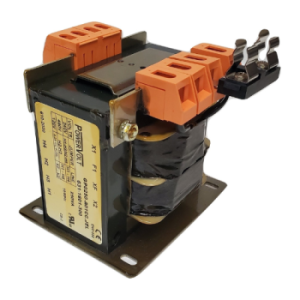
Power transformers are the backbone of modern electrical infrastructure.
From industrial plants and manufacturing facilities to utilities and large commercial systems, power transformers ensure efficient voltage conversion and reliable energy distribution.
This comprehensive guide by Powervolt Group explains what power transformers are, how they work, how to select the right one, safety standards, applications, and maintenance best practices-helping engineers, OEMs, and decision-makers make informed choices.
What Is a Power Transformer?
A power transformer is a static electrical device used to transfer electrical energy between circuits through electromagnetic induction, typically at high voltage levels.
Its primary purpose is to step up or step down voltage while maintaining frequency, enabling efficient power transmission and distribution.
Power transformers are commonly used in:
- Power generation stations
- Industrial substations
- Heavy machinery and process plants
- Data centers and infrastructure projects
Working Principle of Power Transformers
Power transformers operate on Faraday’s Law of Electromagnetic Induction.
How it works:
- AC voltage applied to the primary winding creates a magnetic flux
- The flux flows through the transformer core
- Voltage is induced in the secondary winding
- Output voltage depends on the turns ratio
Voltage Ratio = Turns Ratio
Powervolt Group designs transformers with optimized core materials to reduce losses and improve long-term efficiency.
Main Components of a Power Transformer
- Core: Laminated silicon steel core to minimize eddy current losses
- Primary Winding: Receives input voltage
- Secondary Winding: Delivers output voltage
- Insulation System: Prevents electrical breakdown
- Cooling System: Air-cooled or oil-cooled depending on rating
- Tank / Enclosure: Protects internal components
Types of Power Transformers
1. Step-Up Power Transformers
Increase voltage for efficient long-distance transmission.
2. Step-Down Power Transformers
Reduce voltage for industrial and end-use equipment.
3. Single-Phase Power Transformers
Used in light industrial and specialized applications.
4. Three-Phase Power Transformers
Ideal for heavy industrial loads and power distribution networks.
5. Dry-Type Power Transformers
- No oil
- Safer for indoor installations
- Lower maintenance
6. Oil-Filled Power Transformers
- Higher capacity
- Better cooling
- Used in substations and utilities
Power Transformer Ratings Explained
Understanding ratings is critical for correct selection.
Key parameters:
- kVA / MVA Rating: Load handling capacity
- Primary & Secondary Voltage: Input/output levels
- Frequency: 50Hz or 60Hz
- Impedance: Affects fault current and voltage regulation
- Temperature Rise: Indicates thermal performance
Powervolt Group Tip:
Always select transformers with headroom (not running at 100% capacity continuously).
Industrial Applications of Power Transformers
Power transformers are essential in:
- Manufacturing plants
- Oil & gas facilities
- Steel and cement industries
- Renewable energy systems
- Data centers
- HVAC and automation systems
Each application demands specific voltage, insulation class, and cooling method-areas where Powervolt Group provides custom-engineered solutions.
Safety Standards & Compliance
Power transformers must meet global safety and performance standards, including:
- IEC Standards
- IEEE Standards
- UL Recognition (where applicable)
- NEC Compliance
Proper grounding, insulation, and protection devices are critical for safe operation.
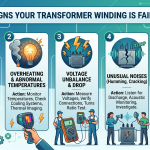
Common Power Transformer Problems
- Overheating
- Voltage fluctuations
- Insulation breakdown
- Noise and vibration
- Overloading
Detailed solutions are covered in our cluster guide:
Common Power Transformer Problems and How to Fix Them
Preventive Maintenance for Power Transformers
Regular maintenance improves lifespan and performance.
Best practices:
- Periodic insulation testing
- Temperature monitoring
- Load analysis
- Cleaning and ventilation checks
- Oil testing (for oil-filled units)
Preventive maintenance can extend transformer life by 10–20 years.
Why Choose Powervolt Group Power Transformers?
At Powervolt Group, we manufacture and supply high-performance industrial power transformers designed for demanding environments.
- Custom voltage and kVA ratings
- High-efficiency core design
- Global compliance standards
- Reliable thermal protection
- Long service life
We serve OEMs, panel builders, EPC contractors, and industrial clients worldwide.
FAQs
Q1. What is the difference between power and distribution transformers?
Power transformers operate at higher voltages and loads, mainly in transmission networks.
Q2. How do I choose the right power transformer?
Consider voltage, kVA rating, load type, environment, and safety standards.
Q3. Dry-type or oil-filled-what’s better?
Dry-type for indoor safety; oil-filled for higher capacities.
Q4. How long does a power transformer last?
With proper maintenance, 25–40 years is common.
Looking for reliable industrial power transformers tailored to your application?
Contact Powervolt Group today for expert consultation and custom transformer solutions.
Explore our full range of Power Transformers designed for efficiency, safety, and long-term.