


Applications and Load Handling of Encapsulated Transformers: Choosing the Right Fit
 January 22, 2026
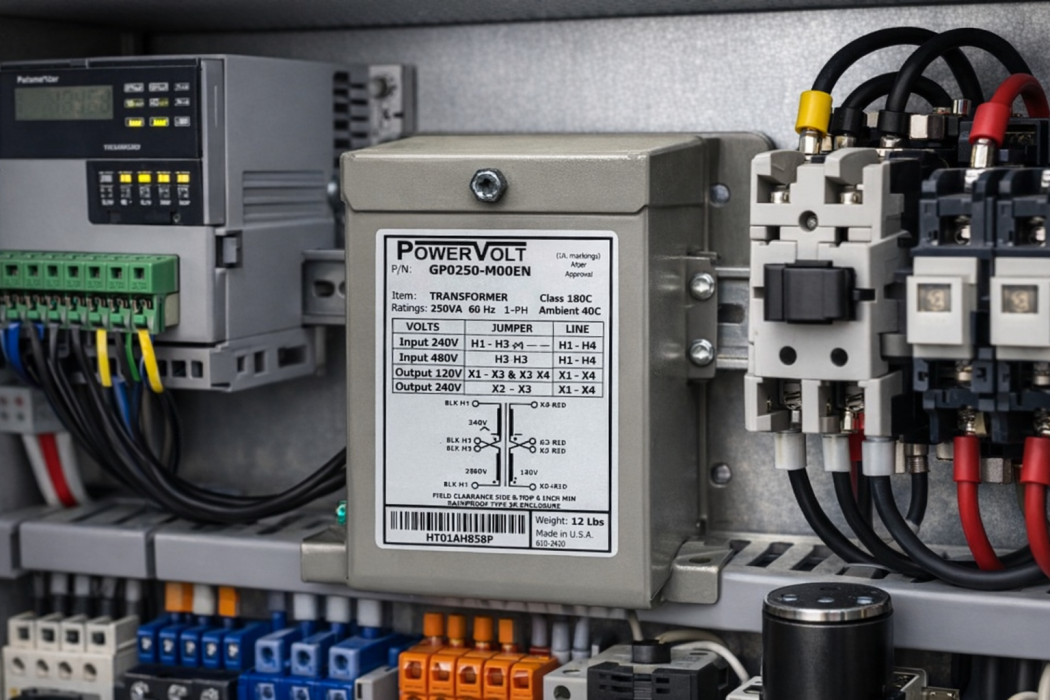
Encapsulated transformers play a critical role in modern electrical systems where safety, reliability, and compact design are essential.
At Powervolt Group, we design and supply encapsulated transformer solutions that perform reliably even in the most demanding environments.
In industrial, commercial, and, at times, residential electrical systems, transformers are often exposed to harsh, dirty, or damp environments.
When conventional dry-type transformers fail due to moisture ingress or environmental contamination, encapsulated (or “potted”) transformers are the solution.
These transformers have their core and coil assemblies completely encased in a mixture of epoxy resin and silica sand, providing a solid, impervious barrier against external contaminants.
What is an Encapsulated Transformer?
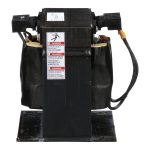
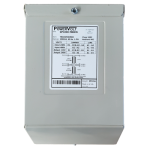
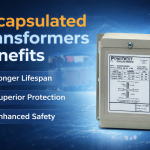
An encapsulated transformer is a transformer in which the core and windings are fully enclosed in a protective insulating material, typically epoxy resin or thermoplastic.
Unlike standard dry-type units that rely on ventilated enclosures, encapsulated transformers are sealed blocks, making them highly resistant to dust, moisture, and chemical hazards.
They are typically designed for low-voltage applications (below 1,000 volts) and are ideal for locations where maintenance is difficult or impossible.
For a deeper comparison between configurations, you may also find our detailed guide helpful: “Single-Phase vs Three-Phase Encapsulated Transformers: Which One to Select?”
Common Applications of Encapsulated Transformers
Encapsulated transformers are primarily chosen for environments where standard ventilated dry-type units would fail due to contaminants or physical stress.
Harsh Industrial Sites
Critical for pulp and paper mills, steel mills, and chemical plants where dust, lint, and corrosive vapors are prevalent.
Renewable Energy
Increasingly used in 2026 for solar and wind installations, providing maintenance-free power distribution that withstands outdoor exposure.
Marine & Offshore
Their resistance to saltwater and high humidity makes them the standard for marine vessels and offshore platforms.
Food & Beverage
The sealed design prevents bacterial accumulation and allows for easy cleaning in hygiene-critical wash-down areas.
Sensitive Electronics
Used in medical devices, audio systems, and data centers because the encapsulation reduces audible noise and electromagnetic interference.
Powervolt Group works closely with system integrators and OEMs to ensure the right encapsulated transformer is selected for each of these applications.
Understanding Load Handling in Encapsulated Transformers
Proper load handling is essential to ensure transformer longevity and system reliability. Incorrect load selection is one of the most common causes of transformer failure.
1. VA Rating and Load Demand
Encapsulated transformers are rated in volt-amperes (VA), which represents the maximum load they can safely supply. When selecting a transformer:
- Calculate the total connected load (in VA)
- Include inrush currents from relays, contactors, or solenoids
- Add a safety margin (typically 20–30%)
Operating a transformer continuously near or above its VA rating can lead to overheating and premature insulation breakdown.
2. Inrush and Intermittent Loads
Many control components draw significantly higher current during startup than during normal operation. Encapsulated transformers must be sized to handle:
- High inrush currents
- Intermittent or cycling loads
- Simultaneous operation of multiple devices
Ignoring inrush current is a common sizing mistake that results in nuisance tripping or voltage drop.
3. Continuous vs. Intermittent Duty
Not all loads operate continuously. Understanding duty cycles helps optimize transformer selection:
- Continuous loads require conservative sizing
- Intermittent loads may allow smaller VA ratings if properly evaluated
However, undersizing-even for intermittent use—can reduce transformer life.
4. Temperature Rise and Thermal Performance
Encapsulated transformers rely on surface area and internal thermal paths for heat dissipation. Load directly affects temperature rise:
- Higher loads result in higher operating temperature
- Poor ventilation increases thermal stress
Selecting a transformer designed for your ambient temperature and enclosure conditions is critical for reliable operation.
Choosing the Right Fit
To ensure optimal performance and longevity, verify these factors before selection:
A. Calculate Total Load (kVA)
Determine your total connected load in kVA, factoring in peak demand. Always add a safety margin (for example, 125% of the anticipated load) to allow for future expansion.
B. Evaluate the Environment
- Harsh Environments: If it is a wash-down area or has heavy dust, choose an encapsulated unit with a NEMA 3R or 4X stainless steel enclosure.
- Noise Constraints: If used in a commercial building or school, the solid encapsulation provides lower acoustic noise than ventilated models.
C. Check Voltage & Phase
Identify your primary (input) and secondary (output) voltage requirements (for example, 480V to 208Y/120V) and determine whether you need a single-phase or three-phase unit. Refer to our pillar article “Single-Phase vs Three-Phase Encapsulated Transformers: Which One to Select?” for detailed guidance.
D. Look at Mounting & Space
Because encapsulated transformers are compact, they are ideal for wall-mounting, saving valuable floor space in tight electrical rooms.
Common Load Handling Mistakes to Avoid
- Undersizing the transformer based on nominal load only
- Ignoring inrush current from inductive devices
- Overlooking ambient temperature effects
- Running transformers continuously at maximum capacity
Avoiding these mistakes improves system efficiency and minimizes downtime.
Frequently Asked Questions (FAQs)
Q 1. How do I determine the correct VA rating for my application?
Add up the VA requirements of all connected loads, include any inrush current from inductive devices, and apply a safety margin of 20–30%. This ensures the transformer operates within safe thermal limits.
Q 2. Can an encapsulated transformer handle inrush current?
Yes, but only if it is properly sized. Devices such as relays, solenoids, and contactors draw higher current at startup. The transformer must be rated to handle these short-duration peaks without excessive voltage drop or overheating.
Q 3. What happens if a transformer is undersized?
An undersized transformer may overheat, experience voltage drop, trip protective devices, or suffer premature insulation failure—leading to reduced system reliability and downtime.
Q 4. Are encapsulated transformers suitable for continuous operation?
Yes. When correctly sized and installed with adequate ventilation, encapsulated transformers are designed for continuous duty in control panels, HVAC systems, and automation equipment.
Q 5. Do ambient temperature and enclosure affect performance?
Absolutely. Higher ambient temperatures and poorly ventilated enclosures increase internal heat buildup. Always select a transformer rated for the expected operating environment.
Q 6. What is the difference between intermittent and continuous loads?
Continuous loads draw power constantly and require conservative sizing. Intermittent loads cycle on and off but still require careful evaluation—especially if frequent startups create repeated inrush current.
Q 7. Are encapsulated and enclosed transformers the same?
The terms are often used interchangeably. Both refer to transformers with fully protected windings, though the encapsulation material and enclosure design may vary by manufacturer.
Conclusion
Encapsulated transformers are the premier choice for protecting electrical infrastructure in wet, dusty, or high-vibration environments.
By carefully calculating your kVA load and ensuring you have the correct NEMA rating for the environment, you can achieve a long-lasting, maintenance-free power solution.
Ready to Select the Right Encapsulated Transformer?
At Powervolt Group, our engineering team helps you choose the right encapsulated transformer based on load, environment, and application-whether you need single-phase or three-phase solutions.
Contact Powervolt Group today to discuss your requirements, request technical support, or get a customized transformer recommendation for your project.